OCO Conference

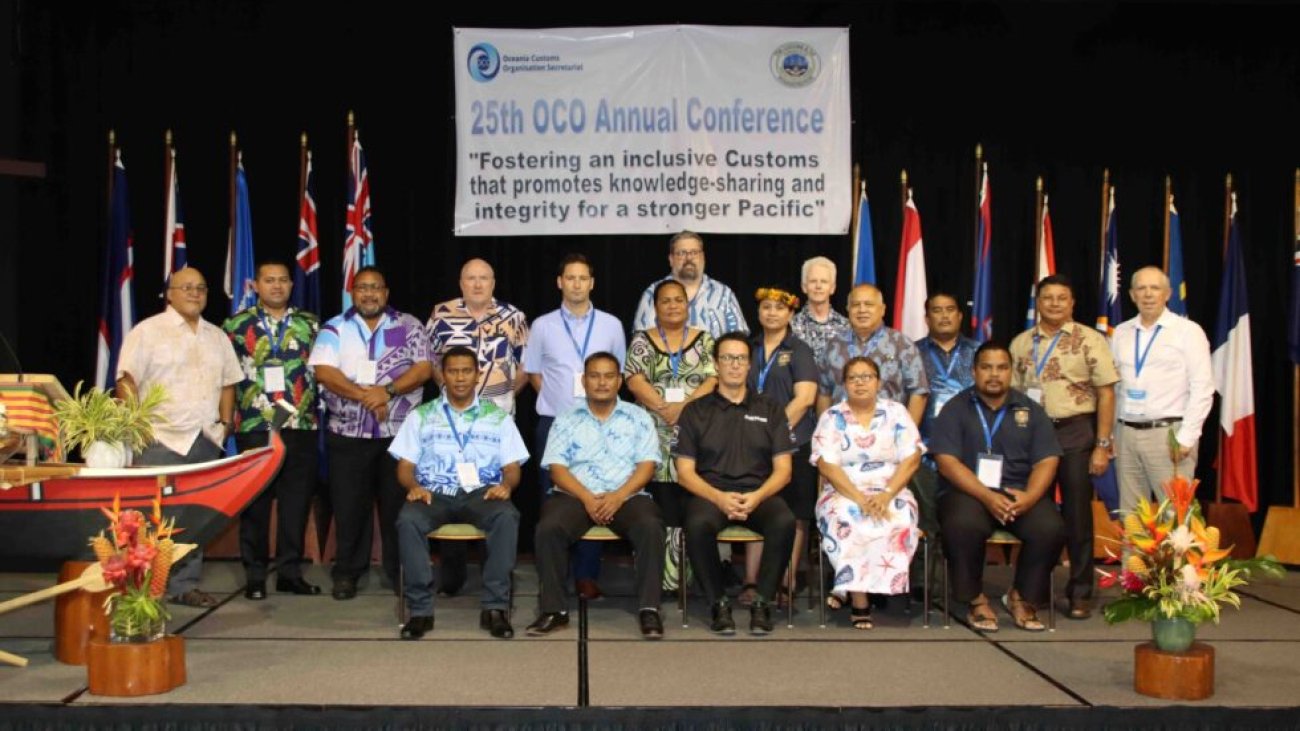
25th OCO ANNUAL CONFERENCE 2023

“Fostering an inclusive Customs that promotes knowledge-sharing and integrity for a stronger Pacific”

1. The Oceania Customs Organisation (OCO) convened its 25th Annual Conference from 18-20 July 2023 in Pohnpei, Federated States of Micronesia. The Conference adopted the theme “Fostering an inclusive Customs that promotes knowledge-sharing and integrity for a stronger Pacific”, emphasising the importance of Pacific Customs administrations to build on collective ability for smart decision making and better productivity.

2. The conference was attended by 14 Heads of Customs Administration of the Governments or their respective nominees from Australia, Commonwealth of the Northern Mariana Islands, Cook Islands, Federated States of Micronesia, Guam, Kiribati, Nauru, New Caledonia, New Zealand, Niue, Palau, Tonga, Tuvalu and Vanuatu. Member Administrations unable to attend were American Samoa, Fiji, French Polynesia, Marshall Islands, Papua New Guinea, Samoa, Solomon Islands, Timor-Leste and Wallis & Futuna.

3. The invited partner agency representatives from the IMF Pacific Financial and Technical Assistance Center (PFTAC), Pacific Islands Chiefs of Police (PICP), Pacific Immigration Development Community (PIDC),Pacific Islands Forum Secretariat (PIFS), Secretariat of the Pacific Community (SPC), United Nations Conference for Trade and Development (UNCTAD), United Nations Office on Drugs and Crime (UNODC), Japan Customs and Tariff Bureau, Pacific Islands Tax Administration Association (PITAA), Immigration New Zealand, United States Coast Guard (USCG), International Organisation for Migration (IOM) and WCO Regional Office for Capacity Building for Asia Pacific (ROCB A/P) attended the open session of the conference.

4. The Conference was opened by the Vice President of the Federated States of Micronesia, H.E. Mr. Aren B. Palik. His Excellency welcomed the conference participants to Pohnpei and expressed his gratitude to visitors from all over the Pacific. He reflected on the theme of the conference and challenged the Customs leaders as to how the new “Inclusive” Customs would look like in the future.

a. WCO Secretary General-Dr. Kunio Mikuriya addressed the conference by a video and emphasized his Secretariats hard work on pursuing support to members with trade facilitation and governance guidelines towards best practice. He also congratulated the OCO and wished good luck for reconvening a face to face annual conference.

b. The OCO Chair- Mr. Randy Sue welcomed the members and partners to the conference. He alluded to some of the work activities accomplished during the fiscal year 2022-23 and thanked the current and former leadership of the OCO Secretariat. Also acknowledged was the support of the EU and UNCTAD for supporting the FSM Customs and Tax with its new ASYCUDA Customs clearance system.

c. The OCO Head of Secretariat, Ms. Nancy Oraka reported on highlights that the OCO delivered in the past fiscal year and applauded the members for maintaining and fostering the close ties within the membership.

5. The Conference commended the updates provided by Member administrations stating their progress with Customs modernization plans and implementing the international standards and best practice in trade and security regime. Following the member updates, the Conference:

a. Noted the importance of developing the mechanisms of sharing import and export information in the Pacific trade regime.

b. Emphasized the challenges of sustainability and enhancement of the ASYCUDA system in future business development plans.

c. Expressed the need for more innovation such as Non-Intrusive Inspections and K9 capability, noting both initiatives can be expensive to maintain. Proper research and planning are vital to this initiative.

6. The Conference:

a. Welcomed the implementation of ASYCUDA Customs Clearance system in the Pacific. Two-thirds of the OCO membership now have this capability. The Conference also welcomed the IMPACT project which will support their trade facilitation capability as required by the WTO-TFA agreement.

b. Noted the OCO’s progress with the EDF11 activities in reforming the members trade facilitation program and improving Customs leadership.

c. Commended the achievements of Vanuatu Customs and Inland Revenue with the Single Window and Trade Facilitation Agreement (TFA) implementations.

d. Acknowledged the PACComtrade Database progress being led by Secretariat of the Pacific Community and supported by the OCO. The session also witnessed the signing of the PACComtrade Database Agreement between SPC and specific Customs Administrations. Tonga and Kiribati signed the agreement whilst the conference also acknowledged Tuvalu and Vanuatu for signing the similar agreement with SPC prior to the conference.

e. Acknowledged the progress made by the Guam CQA in its journey towards Customs Modernisation as they implement new trade and revenue initiatives.

f. Noted OCO’s update on capacity building with legislation and enforcement capabilities for members with IPR infringements.

g. Welcomed the WCO-ROCB, Japan Customs and IOM work activities and their continued support for further strengthening Customs capacity building programs.

h. Supported the conduct of an operation to address revenue leakage in the Pacific to enhance information sharing, interoperability and joint operations amongst the membership.

i. Re-affirmed the importance of gender equality and workplace diversity in Customs Administrations.

j. Noted the challenge of countering transnational organised crime and of maritime security, and welcomed the support of PIDC, UNODC, PICP and PIFS.

7. During the close session the members approved the future budget and workplan, and received an update on priority trade facilitation initiative PACHS 2022.

8. The conference expressed their deep gratitude to the Government and people of the FSM for the excellent arrangements in hosting the 2023 Annual Conference, and for the kind hospitality extended during their stay in Pohnpei.

9. The conference thanked Mr. Randy Sue for his contribution as Chairperson of the OCO Conference and Steering Committee in the past term, and welcomed Mr. Xavier Mitchell of Cook Islands as the new Chair and Cook Islands as the venue for the 2024 Annual Conference.
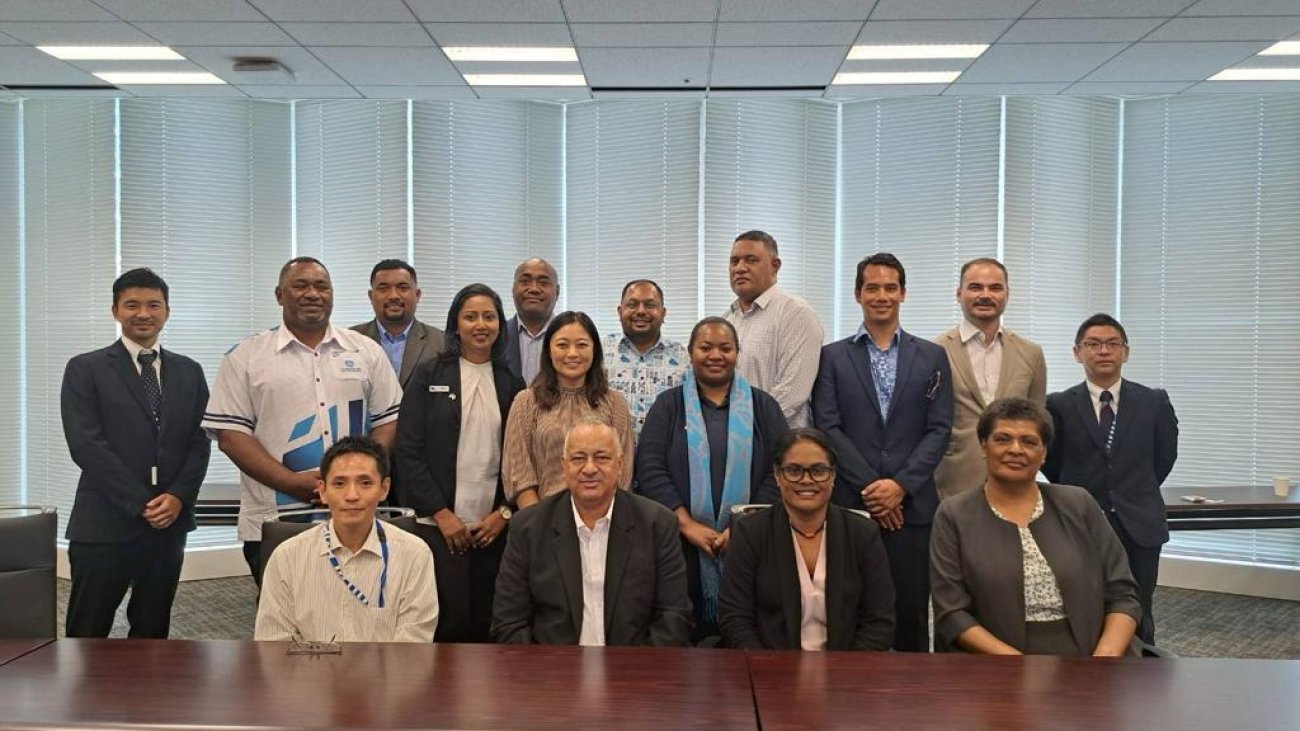
PHOTO-2023-10-10-14-32-53

Digitization Key Agenda Item as Delegates Undertake Study Tour to Japan

Tokyo, Japan: A delegation from the Governments of Fiji, Palau, and Vanuatu has travelled to Japan this week, furthering a collaborative partnership between the three countries in the areas of digitization and border management.

As part of its commitment to the Free and Open Indo-Pacific Vision, the Government of Japan strives to promote unrestricted and resilient economic activity throughout the region. Recognizing the significance of digitalization, the Government of Japan is supporting the adoption of digital solutions for border management across the Pacific to advance economic growth.

The study tour is supported by the Government of Japan and its Project for Strengthening Border Control Capacity for the COVID-19 Crisis, implemented by the United Nations Development Programme (UNDP) Pacific Office in Fiji.

The project aims to support border agencies in Fiji, Palau and Vanuatu in reinforcing their capacities, capabilities and systems for effective and efficient movement of travellers and cargo, and to strengthen links for data and knowledge sharing, inter-agency and cross-regional cooperation, and the use of digitalization as a border management tool across the Pacific.

Following an initial video link with the Government of Japan’s Digital Agency – which commenced the digitalization conversations in April – and a visit to Fiji in May from Digital Agency officials, representatives from Fiji, together with Palau and Vanuatu, have travelled to Tokyo to further discuss the implementation of a digital arrival card system to streamline border entry processes.

The digital arrival card is an electronic version of the physical arrival card currently in use, containing personal information, trip and health declaration details. It is an online document that can be accessed through mobile devices and computers allowing passengers to fill and submit information prior to arrival, and is currently used in countries such as Australia, New Zealand, Singapore, and Japan.

Spearheaded by Fiji’s Ministry of Home Affairs and Immigration, the rollout of a digitized arrivals systems for passengers entering the country falls in line with the government’s overall digital transformation strategy, along with the National Border Security Upgrade Priorities 2023-2028.

While in Japan the delegation will see firsthand how the Visit Japan Web digital arrival system – led by Japan’s Digital Agency – works at various ports of entry, discuss relevant legislation and coordination with multiple agencies, budget and software maintenance, and associated information management and cyber security risks associated with a digitized arrival card initiative.

The establishment of Visit Japan Web has been warmly received by incoming passengers to the country’s ports of entry – greatly improving quarantine, immigration and customs declaration processes.

Director-General Group of Service for Citizens, Digital Agency of Japan, Keisuke Murakami, made note of the significance of the collaboration.

“It is our pleasure to share our experiences of Visit Japan Web with our Pacific neighbours, and we warmly welcome the delegation to Tokyo. Following our visit to Fiji earlier this year we are excited to continue supporting the digitalization efforts of other countries across the region, and we look forward to showcasing our world-leading work in the field of automation and digitalization,” he said.

Leading the delegation to Japan, Permanent Secretary for the Ministry of Home Affairs and Immigration, Mason Smith, said digitizing the arrivals process into the country would create a single window passenger clearance system, reducing clearance time and person-to-person contact for those entering Fiji.

“The digitization of Fiji’s passenger arrival card will create a future where seamless entry experiences, advanced data management, and robust security measures become the norm. This process will strengthen the country’s immigration and security systems, this being of particular importance for Fiji as tourism numbers continue to surge on the back of COVID-19 restrictions ending. On behalf of the Government of Fiji I would like to thank the Government of Japan for their strong partnership in helping to support this rollout,” he said.

Resident Representative, UNDP Pacific Office in Fiji, Munkhtuya Altangerel, said the project champions collaboration and knowledge sharing, with the visit to Japan to boost border management in Fiji.

“The reasons for having a digitalization strategy are clear, but the difficulties of putting it into practice are often underestimated. This visit to Japan’s Digital Agency alongside the ongoing support from UNDP’s Integrated Border Management Project are helping us to build genuine cooperation between key border management stakeholders throughout the Pacific region,” she said.

For further media enquiries please contact: Nick Turner, Communications and Advocacy Specialist, UNDP Pacific Office in Fiji. (P) +679 971 6458 – (E) nicholas.turner@undp.org

368367748_306595198548817_4815993098828077724_n

Workshop on Strengthening Harmonized Systems (HS) in the Pacific

Apia, Samoa, August 29, 2023

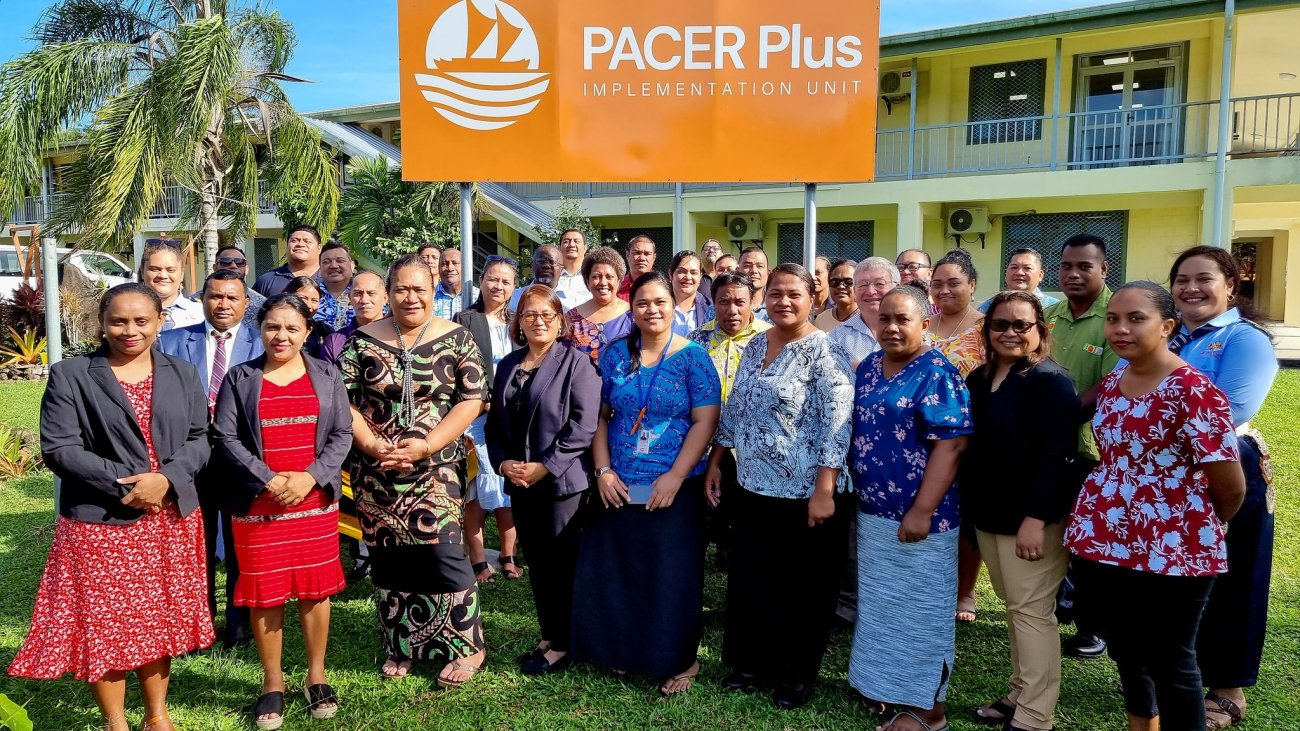
The Oceania Customs Organization (OCO) and the PACER Plus Implementation Unit successfully conducted a Regional Workshop on the Harmonized System (HS) Nomenclature in Apia, Samoa. Held within the framework of the European Union (EU) funded Improving Pacific Islands Customs and Trade (IMPACT) project implemented in partnership with United Nations Conference on Trade and Development (UNCTAD) and OCO, the five-day event enhanced the capacity of Pacific countries in successfully implementing the Harmonized System Nomenclature 2022, the world’s global standard for classifying goods in international trade.

The workshop, which took place in Apia, Samoa, brought together Customs experts and representatives from the Commonwealth of the Northern Mariana Islands, Cook Islands, Fiji, Guam, Kiribati, Nauru, Niue, Palau, Samoa, Solomon Islands, Timor-Leste, Tonga, Tuvalu, and Vanuatu, to evaluate and refine their capacity on HS and PACHS. Several notable outcomes emerged from the event, shaping the future of customs procedures across the pacific. 

The first major accomplishment was the successful review of country’s transposition of HS 2022 to retain historical concessions and ensure market access conditions remain unaffected by technical revisions to scheduled tariff commitments. Participants collaborated with regional experts during the workshop to critically analyze the existing framework, ensuring alignment with international best practices and standards. This comprehensive review establishes a solid foundation for further advancements in Harmonized Systems.

Moreover, the workshop provided an opportunity to raise awareness on the EU-Pacific States interim Economic Partnership Agreement (iEPA) applied by EU 27 Member States, Fiji, Papua New Guinea, Solomon Islands and Samoa. On the first day of the workshop, Trade Facilitation Expert Mr. Michael Ligo presented on the iEPA and expounded on the benefits of the Agreement between Pacific Island States and the EU.  Michael Ligo also provided a detailed background on the initial initiatives between EU and the Africa, Caribbean, and Pacific States, and how it developed into the current bi-lateral Economic Partnership Agreement followed up by further analysis into the EU Market Access Offer (MAO), and the tariff requirements for Pacific States. In addition, Mr. Massimo Diomedi Camassei, Trade Correspondent/Programme Manager at the EU Delegation for the Pacific added that presently the iEPA governs the liberalization of Trade in Goods between the parties.

Currently, the parties are considering the option to include the liberalization of Trade in Services as a new component of the agreement. To support Pacific Island Countries to benefit from the iEPA, the EU funded a €37 million Pacific Regional Integration Support Programme of which IMPACT is one of the project and will continue working with Pacific States to facilitate their accession if interested and the creation of trade opportunities in the future.

“PACER Plus will continue to offer its support in the implementation of HS and PACHS 2022 considering its significant importance in customs functions,” PPIU Operations and Secretariat Manager, Mrs. Laisiana Tugaga said. She added, “Implementing the latest version of the HS is critical amongst the Pacific Island Countries to simplify intra-regional trade transaction and enhance the quality of trade statistics compiled in the region, we are very grateful to the input from our experts during the workshop for their assistance.”

 “The workshop was excellent, and the facilitators were great, and the information and assistance provided was practical.

The experts leading the workshop recognized the participants for their commitment and proactive approach to the training sessions. The participants maintained consistently high levels of interest, critical thinking, and active participation. Ms. Nancy T. Oraka, Head of OCO, expressed appreciation for the participants’ eagerness to unlearn old thinking and embrace new methodologies reflecting their dedication to continuous improvement and the pursuit of best practices in harmonized systems. 

The workshop was jointly organized by the PACER Plus Implementation Unit and the Oceania Customs Organization (OCO) under the European Union (EU) funded Improving Pacific Islands Customs and Trade (IMPACT) project implemented in partnership with United Nations Conference on Trade and Development (UNCTAD). 

373350575_828928242261458_272877955033580206_n

Customs K9 Unit and Juvenile Justice Team Up to Conduct

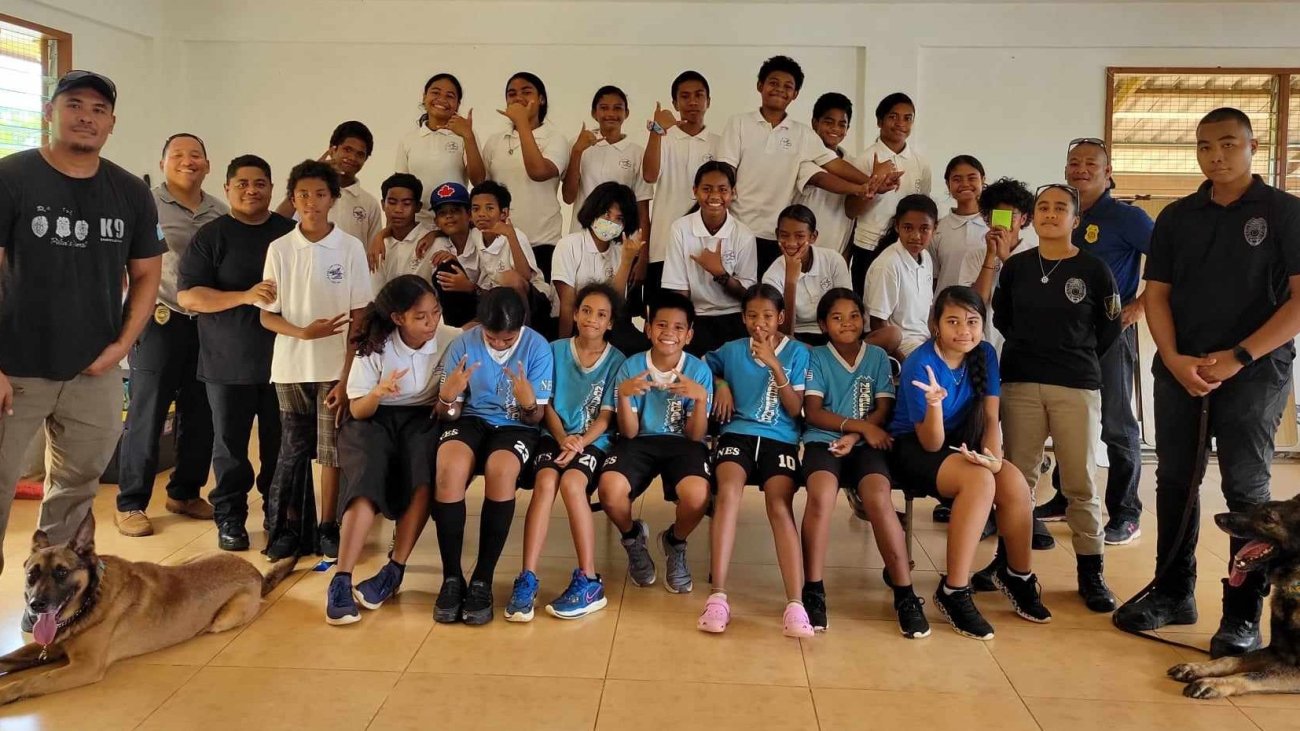
As part of the public relations and community engagement efforts, the Customs Drug Detector Dog Unit along with the Division of Juvenile Justice, Bureau of Public Safety joined forces to conduct an outreach program for the 6th to 8th grade students in Ngardmau, Ngerchelong and Melekeok Elementary Schools as part of an awareness series. The Outreach Program was conducted from 6th – 8th September, 2023.

While the Division of Juvenile Justice program aims to educate the students on “anti-Bullying” and promoting good behavior in schools, the Bureau of Customs Drug Detector Dog Unit also had the opportunity to provide the students with an understanding of their role, the importance of staying away from drugs and how we use the K9 dogs as a tool to detect and search for drugs in our fight to protect the border against drugs coming to Palau. While the students really enjoyed watching the dogs search and detect drugs as part of our demonstration, we hope this program will continue to have a positive impact on the students. The outreach program was a success and we plan to deliver more programs this year.

AW Mobilization Seminar

Customs Software to Boost Cross-Border Trade in Palau

European Union Funding for UNCTAD ASYCUDAWorld Customs Management System Roll-Out

Ngerulmud, Palau. 25 August 2022

The Government of Palau has started work under the EU funded IMPACT project that will deliver a new customs management system to help the country increase the pace of customs clearance and boost its ability to engage in international trade. Palau will use ASYCUDAWorld, a customs management system developed by UNCTAD’s Automated System for Customs Data (ASYCUDA) Programme, to deliver the latest, cutting edge, customs technology. Processing customs paperwork manually is time-consuming and inefficient. It also requires traders to travel to import and export clearing points to physically present their documents, costing them time and money. A mobilization seminar was held 23-24 August to raise awareness among key stakeholders regarding the need for simplified and streamlined customs procedures, the potential benefits of fully automated customs clearance processes, and the specific supporting role of the UNCTAD ASYCUDAWorld system.

Surangel Whipps Jr., President of Palau, when opening the event said, “I want to thank the UN, the EU, and UNCTAD for their support in making sure that this ASYCUDA system is implemented in Palau. It’s really about partnership and without strong partners like you, we wouldn’t have been able to move this project forward to build a more prosperous and safer Palau”. He added, “I hope this will make it easy for traders to submit their reports. Hopefully this will help the business community, reduce the lines at the customs office and improve our customer service to the people that we serve”. ASYCUDA is UNCTAD’s largest technical assistance programme and currently has software running in over 100 countries, including 41 small island developing states (SIDS). ASYCUDAWorld will enable Palau to optimize customs procedures and boost government revenue by ensuring that all goods are declared and the correct duties collected online. When rolled out, the system will make cross-border trade easier, faster and cheaper for businesses in Palau, and for those wishing to do business with them. ASYCUDAWorld will also help Palau customs to gather reliable and timely trade and fiscal statistics to better support the government with economic planning and evidence-based decision-making.

Dr. Erja Askola, Chargé d ’Affaires of the EU Delegation for the Pacific, said, “The European Union aims to jointly address the challenges that Pacific States and companies face to benefit from accessing regional and international markets. Reducing the time Palau moves goods in and out is one of the many interventions we support in the Pacific to promote regional economic integration. We also welcome more countries of the region to join the European Union-Pacific States Economic Partnership Agreement”.

Palau Minister of Finance, Kaleb Udui Jr., added, “The Ministry is pleased to join over 100 nations in implementing ASYCUDA in line with international standards. This will expand trading opportunities and boost the capacity of the Republic, and will create a more transparent, less costly and more equitable trading environment for importers and exporters of Palau”.

“Customs plays a crucial role in supporting the economic competitiveness of a country. One that ensures that revenues are collected while the community and the environment are protected”, highlighted the UN Resident Coordinator for Micronesia, Jaap Van Heirden. The IMPACT project will support the modernization of customs administration and facilitate trade for Palau regionally and internationally. It will contribute to sustainable and inclusive prosperity in the region, which is an area of focus of the EU strategy for cooperation in the Pacific. The funding for the IMPACT project comes under the EU’s ‘Pacific Regional Integration Support’ (PRISE) Programme, which aims to increase trade between Pacific States’ as well as between themselves and the EU-27 Member States.

i1l6is0n

Work on Strategic Planning

Over the past 2 weeks, Customs, Immigration and Biosecurity Officers (CIB) from both management and intermediate levels have been meeting at least three times a week to discuss and work on their strategic plan as an activity organized by the Bureau of Customs and Border Protection (BCBP). According to Director John Tarkong Jr., these sessions of meetings have really focused on developing a strategic plan aimed at fruitful discussions to help identify and analyze issues, existing activities and measures that also involve policy at the Bureau level that we hope will strengthen BCBP to work smarter, be more innovative and more efficient over the next four years. In line with these discussions, Tarkong mentioned that we are also fortunate to receive online technical assistance from the Pacific Immigration Development Community (PIDC) through the advice and expertise of a consultant to help us review our work and point us in the right direction.

A number of challenges were identified to include the COVID-19 Pandemic that affected everyone in Palau and the world and, as a result, this called for greater collaboration between our border, law enforcement and other relevant agencies. Our vision and plan, while still in the making, includes measurable standards and targets and once completed it will help lay out a realistic strategy for reforming our organization over the next four to five years.  While there are indeed significant initiatives that are essential to enable CIB Officers to fulfill our institutional obligations and to become a reliable, trustworthy and an efficient organization, a number of strategic objectives and focus points were formulated. In fact, CIB officers felt that it is very important that we continue to build and invest in our people and technical resources while enhancing border control, infrastructure improvements, strengthen the legal framework, improve travel and trade facilitation, improving revenue and compliance measures as well as improving our overall service delivery. Over the next few weeks, CIB will continue to work and develop the plan. Stay tuned.

4xy7e4rn

FSM visit – Palau Peer Learning

On Monday, April 10, 2023, the Bureau of Customs and Border Protection (BCBP) welcomed Mr. Andrew Haigh, FSM Tax Administrator Advisor and his team that included four Customs Officers from the FSM Customs. The purpose of their planned visit with Customs was to observe and learn from our good practices in Palau and to engage in peer-to-peer learning with staff and sharing experiences. According to Mr. John Tarkong Jr., Director of the BCBP, he explained that our Bureau has been focused not just on Customs related issues, but also on Immigration and Biosecurity activities at the border. In line with the merger between Customs, Immigration and Biosecurity, a series of reforms will be implemented to include restructuring the Bureau, cross-training of our officers and reforms focused around technology that includes Biometrix, x-ray machines, ASYCUDA-Automation on Customs and Trade / Single Windows System and other technology that will assist our officers on employing an intelligence led team at the border.

Overall, under the merger, our agencies have been focused on strengthening our policies and portfolio. Over the past year, we have been focused on improving policy, compliance, enforcement and other operational functions. While it has been challenging for our Bureau, the collaboration and strengthening of our efforts at the border allows us to focus on streamlining and improving our processes and collaboration with other border and related agencies as well as the public.

In addition, Mr. Haigh was able to attend the Coordinated Border Management Working Group as an observer. As you know, the CBMWG was established by President Surangel Whipps Jr., through an executive order, to mandate our border and other related agencies to come together and focus on border related matters and to streamline and improve management related matters at the border. Director Tarkong mentioned that the proposed Customs Act that was introduced by our President last December is currently pending at OEK (Congress). We’re hoping that OEK will realize the importance of the Customs Act and the role that Customs plays in our growing economy which goes beyond the benefits of compliance, border protection and trade facilitation.

Over the course of their visit, the FSM Customs Officers were able to visit various sections to include our ports, observe our customs operations, processes, and the implementation of the ongoing project involving the ASYCUDA Automation System on Customs & Trade. They were able to sit in while training was conducted by our Customs staff for our airline and shipping agencies on the ASYCUDA system. The automated system will go live in July of this year. They observed meetings and discussions with management and staff involving our operations and ongoing projects. They were able to observe how the PGST is currently being implemented by Customs. Overall, the visit was a positive experience for all of us and this created an opportunity to bring our Officers together especially since they normally don’t have time to interact at all. Such exchange also allowed our officers to enhance and engage in strengthening relations and address issues related to customs revenue collections, trade facilitation, and border protection.