

Click here to view the Notice of the BCBP Emails effective on March 22, 2024.

Click here to view the Notice of the BCBP Emails effective on March 22, 2024.

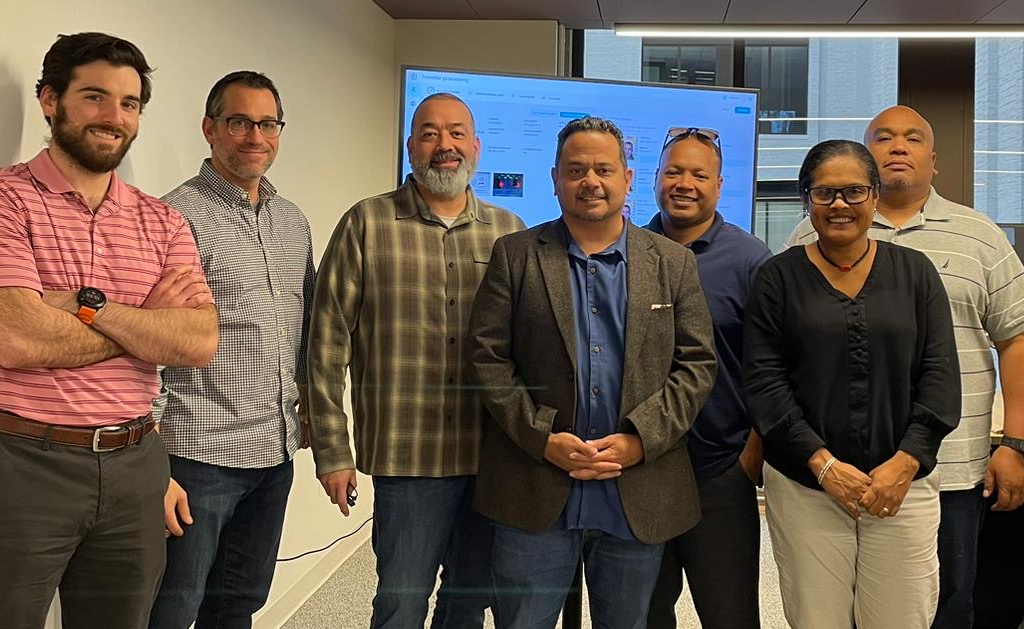
In late February, a team from the Bureau of Customs, Joline Spesungel and its Division of Immigration Officers, Jake Ramon and Levi Idechong met with the Digital Residency Office Director Jay Anson at Minneapolis for a demonstration visitation of the Biometrics system. This project has been initiated to update and replace the Border Management System currently being used in Palau and will allow for an swift integration of the Biometrics equipment that are already in Palau. The project will commence testing on mid to late March, and will be fully operational in the coming months when all the requirements are met.
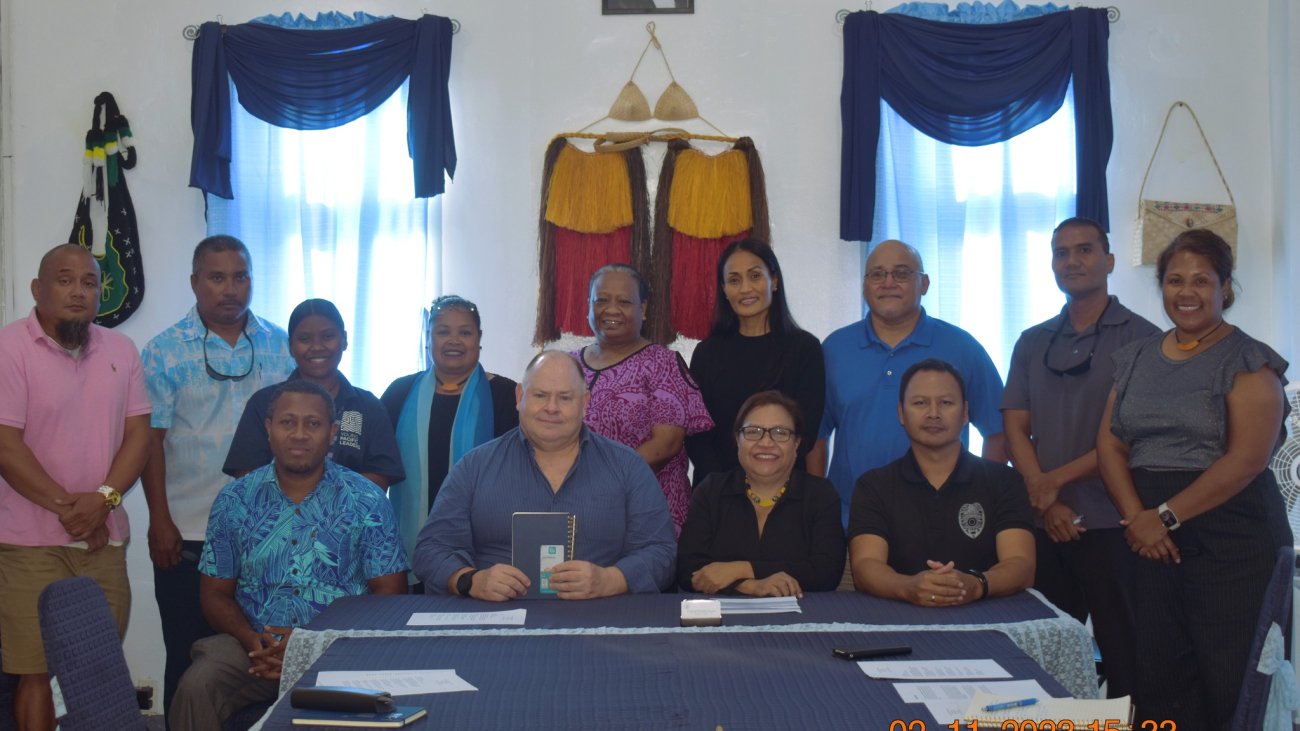
Palau, November 06, 2023 – In a pivotal move towards fortifying Palau’s commitment to combating human trafficking, the Office of the Vice President and the Ministry of Justice, led by the Honorable Vice President and Minister of Justice, J. Uduch Sengebau Senior, joined hands with Minister of Finance, Kaleb Udui, Jr., Director of the Bureau of Customs ·and Border Protection, John Tarkong, Jr., and Acting Chief of Division of Transnational Crime, Lt. Rickley Antonio, to sign a groundbreaking Memorandum of Understanding (MOU) on November 02, 2023.
This historic MOU signifies the collective dedication of these key government bodies to defining their roles and sharing vital information for the effective execution of Palau’s AntiHuman Trafficking Program. The signing ceremony took place at the Vice President’s Office Conference Room and marked a significant milestone in the country’s efforts to combat human trafficking.
The primary objective of this MOU is to establish a common understanding and a comprehensive framework for collaboration between the Ministry of Justice, particularly its AntiHuman Trafficking unit, and the Ministry of Finance, encompassing its Division of Immigration. Together, these parties aim to bolster Palau’s anti-human trafficking program.
The MOU focuses on formalizing procedures and fostering a unified understanding between the Ministry of Justice’s Anti-Human Trafficking Unit and the Ministry of Finance’s Division of Immigration. This synergy is vital to enable effective law enforcement and to eliminate potential vulnerabilities that human traffickers may exploit. The MOU outlines key strategies, including monitoring high-risk countries and closely scrutinizing visa applications, extensions, departures, and other immigration data to identify patterns indicative of human trafficking activities.
Furthermore, the Ministry of Justice, through its Anti-Human Trafficking Unit, commits to providing timely information to the Division of immigration regarding any known or suspected human trafficking patterns. This collaboration ensures that Division of Immigration officers are well-informed about the signs and signals of human trafficking in the course of their duties. It also assists the Division of immigration in shaping their policies and processes and facilitates seamless communication through up-to-date contact details for all Anti-Human Trafficking Unit officers.
This MOU is not only a symbol of unwavering commitment to eradicating human trafficking in Palau but also a testament to the government’s dedication to the safety and well-being of its citizens and residents. It paves the way for a stronger and more coordinated effort against this grave issue that affects societies worldwide.
For media inquiries, please call 488-3198.
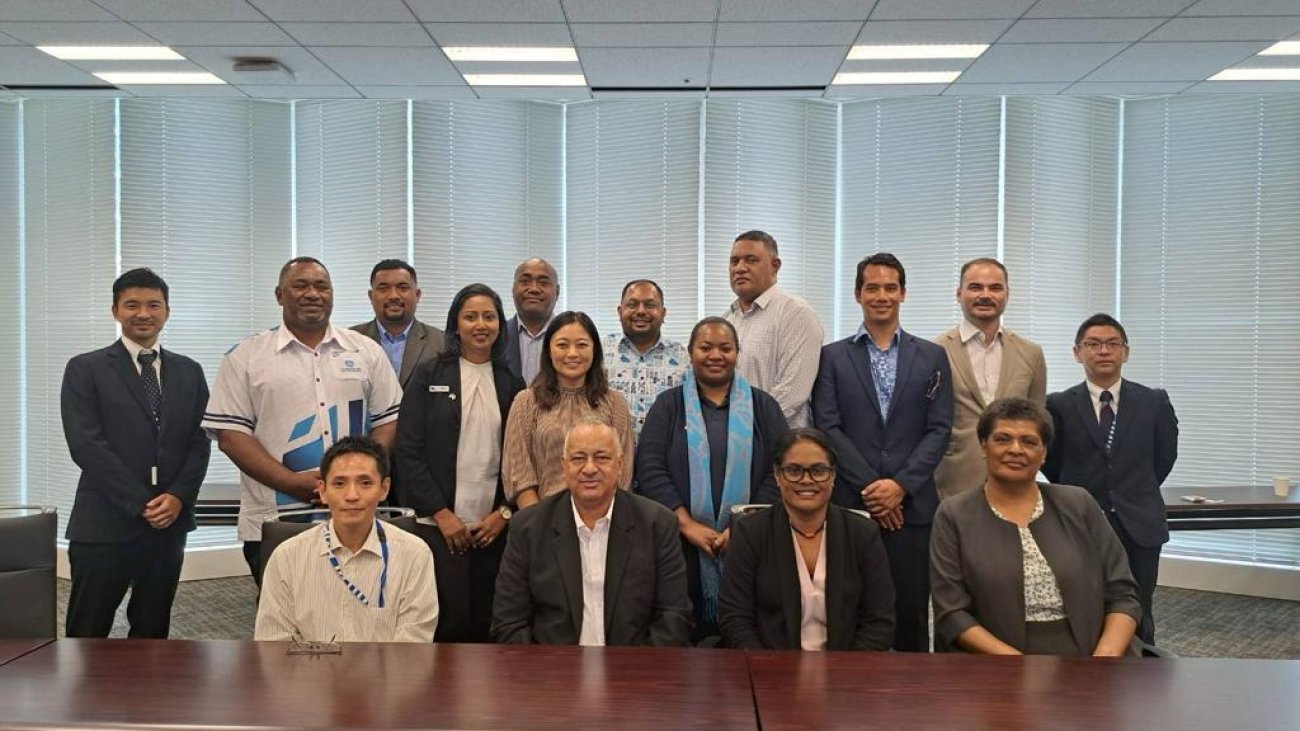
Tokyo, Japan: A delegation from the Governments of Fiji, Palau, and Vanuatu has travelled to Japan this week, furthering a collaborative partnership between the three countries in the areas of digitization and border management.
As part of its commitment to the Free and Open Indo-Pacific Vision, the Government of Japan strives to promote unrestricted and resilient economic activity throughout the region. Recognizing the significance of digitalization, the Government of Japan is supporting the adoption of digital solutions for border management across the Pacific to advance economic growth.
The study tour is supported by the Government of Japan and its Project for Strengthening Border Control Capacity for the COVID-19 Crisis, implemented by the United Nations Development Programme (UNDP) Pacific Office in Fiji.
The project aims to support border agencies in Fiji, Palau and Vanuatu in reinforcing their capacities, capabilities and systems for effective and efficient movement of travellers and cargo, and to strengthen links for data and knowledge sharing, inter-agency and cross-regional cooperation, and the use of digitalization as a border management tool across the Pacific.
Following an initial video link with the Government of Japan’s Digital Agency – which commenced the digitalization conversations in April – and a visit to Fiji in May from Digital Agency officials, representatives from Fiji, together with Palau and Vanuatu, have travelled to Tokyo to further discuss the implementation of a digital arrival card system to streamline border entry processes.
The digital arrival card is an electronic version of the physical arrival card currently in use, containing personal information, trip and health declaration details. It is an online document that can be accessed through mobile devices and computers allowing passengers to fill and submit information prior to arrival, and is currently used in countries such as Australia, New Zealand, Singapore, and Japan.
Spearheaded by Fiji’s Ministry of Home Affairs and Immigration, the rollout of a digitized arrivals systems for passengers entering the country falls in line with the government’s overall digital transformation strategy, along with the National Border Security Upgrade Priorities 2023-2028.
While in Japan the delegation will see firsthand how the Visit Japan Web digital arrival system – led by Japan’s Digital Agency – works at various ports of entry, discuss relevant legislation and coordination with multiple agencies, budget and software maintenance, and associated information management and cyber security risks associated with a digitized arrival card initiative.
The establishment of Visit Japan Web has been warmly received by incoming passengers to the country’s ports of entry – greatly improving quarantine, immigration and customs declaration processes.

Director-General Group of Service for Citizens, Digital Agency of Japan, Keisuke Murakami, made note of the significance of the collaboration.
“It is our pleasure to share our experiences of Visit Japan Web with our Pacific neighbours, and we warmly welcome the delegation to Tokyo. Following our visit to Fiji earlier this year we are excited to continue supporting the digitalization efforts of other countries across the region, and we look forward to showcasing our world-leading work in the field of automation and digitalization,” he said.
Leading the delegation to Japan, Permanent Secretary for the Ministry of Home Affairs and Immigration, Mason Smith, said digitizing the arrivals process into the country would create a single window passenger clearance system, reducing clearance time and person-to-person contact for those entering Fiji.
“The digitization of Fiji’s passenger arrival card will create a future where seamless entry experiences, advanced data management, and robust security measures become the norm. This process will strengthen the country’s immigration and security systems, this being of particular importance for Fiji as tourism numbers continue to surge on the back of COVID-19 restrictions ending. On behalf of the Government of Fiji I would like to thank the Government of Japan for their strong partnership in helping to support this rollout,” he said.
Resident Representative, UNDP Pacific Office in Fiji, Munkhtuya Altangerel, said the project champions collaboration and knowledge sharing, with the visit to Japan to boost border management in Fiji.
“The reasons for having a digitalization strategy are clear, but the difficulties of putting it into practice are often underestimated. This visit to Japan’s Digital Agency alongside the ongoing support from UNDP’s Integrated Border Management Project are helping us to build genuine cooperation between key border management stakeholders throughout the Pacific region,” she said.
For further media enquiries please contact: Nick Turner, Communications and Advocacy Specialist, UNDP Pacific Office in Fiji. (P) +679 971 6458 – (E) nicholas.turner@undp.org


Over the past 2 weeks, Customs, Immigration and Biosecurity Officers (CIB) from both management and intermediate levels have been meeting at least three times a week to discuss and work on their strategic plan as an activity organized by the Bureau of Customs and Border Protection (BCBP). According to Director John Tarkong Jr., these sessions of meetings have really focused on developing a strategic plan aimed at fruitful discussions to help identify and analyze issues, existing activities and measures that also involve policy at the Bureau level that we hope will strengthen BCBP to work smarter, be more innovative and more efficient over the next four years. In line with these discussions, Tarkong mentioned that we are also fortunate to receive online technical assistance from the Pacific Immigration Development Community (PIDC) through the advice and expertise of a consultant to help us review our work and point us in the right direction.
A number of challenges were identified to include the COVID-19 Pandemic that affected everyone in Palau and the world and, as a result, this called for greater collaboration between our border, law enforcement and other relevant agencies. Our vision and plan, while still in the making, includes measurable standards and targets and once completed it will help lay out a realistic strategy for reforming our organization over the next four to five years. While there are indeed significant initiatives that are essential to enable CIB Officers to fulfill our institutional obligations and to become a reliable, trustworthy and an efficient organization, a number of strategic objectives and focus points were formulated. In fact, CIB officers felt that it is very important that we continue to build and invest in our people and technical resources while enhancing border control, infrastructure improvements, strengthen the legal framework, improve travel and trade facilitation, improving revenue and compliance measures as well as improving our overall service delivery. Over the next few weeks, CIB will continue to work and develop the plan. Stay tuned.